
1. What Is SMETA — And How Does It Work?
SMETA (SEDEX Members Ethical Trade Audit) is one of the world’s most widely used ethical audit methodologies, developed by SEDEX (Supplier Ethical Data Exchange). It provides a standardized framework for assessing supplier sites against responsible business practices — covering labor rights, health and safety, environmental performance, and business ethics.
Unlike a certification, SMETA is a reporting and audit framework. Independent third-party auditors assess your site and upload the results to the Sedex platform, where buyers and brands can review your performance.
The 4 Pillars of SMETA
| Labor Standards Fair wages, working hours, no forced/child labor, freedom of association. | Health & Safety Safe working environments, incident management, emergency preparedness. |
| Environment Waste, GHG emissions, energy usage, and resource efficiency. (4-Pillar) | Business Ethics Anti-bribery, corruption prevention, transparent governance. (4-Pillar) |
Organizations choose between a 2-Pillar Audit (Labor + Health & Safety) or a 4-Pillar Audit that adds Environment and Business Ethics. The 4-Pillar audit is increasingly required by global buyers and strongly recommended for organizations with ESG commitments.
2. Why Was SMETA Updated to Version 7.0?
The previous version, SMETA 6.1, served its purpose — but today’s regulatory and ESG landscape has transformed. New legislation has created urgent pressure for more structured, traceable, and transparent audit processes:
- German Supply Chain Due Diligence Act (LkSG): German Supply Chain Due Diligence Act (LkSG) —mandates human rights risk management across the entire supply chain.
- EU Corporate Sustainability Due Diligence Directive (CSDDD) — requires EU companies to identify and address adverse human rights and environmental impacts in their supply chains.
- UN Guiding Principles on Business and Human Rights (UNGPs) — the international benchmark for responsible business conduct.
- EU Green Deal & Mandatory Climate Disclosure — driving emissions transparency and Net Zero commitments across industries.
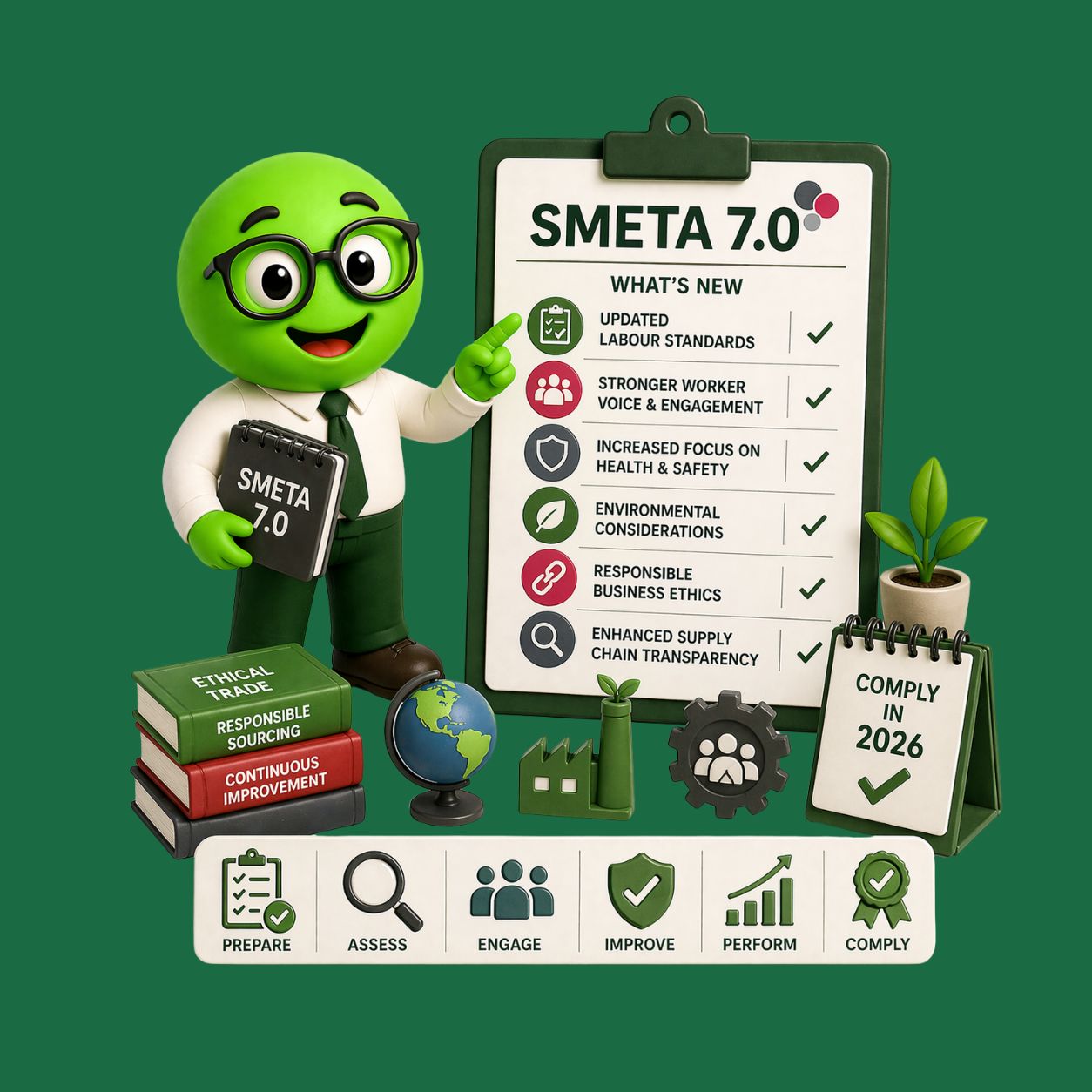
SMETA 7.0 bridges the gap between legacy audit models and where global regulation is heading — transforming the audit from a compliance checkbox into a strategic ESG tool for responsible, future-ready businesses.
3. Key Changes in SMETA 7.0: Full Breakdown
Here is a detailed look at every major change introduced in SMETA 7.0 and what it requires from your organization.
1. Strengthened Environmental & Climate Expectations
- Document energy usage, GHG emissions, and site-level environmental risks.
- Disclose Net Zero goals and actionable carbon reduction plans.
- Train employees in climate literacy and environmental awareness.
- Align with global carbon reporting norms and ESG frameworks.
- Environmental performance is now central to audit readiness — not secondary
2. Reinforced Human Rights & Labor Protections
- Mandatory risk assessments for child labor, forced labor, and workplace discrimination.
- Accurate documentation of timekeeping and rest periods to prevent exploitation.
- Strengthened anonymous grievance mechanisms with non-retaliation policies.
- Active protection of union rights and collective bargaining.
- Aligned with EU CSDDD and German Supply Chain Due Diligence Act.
3. Simplified, Transparent Audit Reporting
- Standardized reporting formats with visual summaries and traffic light risk indicators.
- Structured worker interview insights integrated into audit reports.
- Emphasis on root cause analysis — not just surface-level corrections.
- Improved comparability of results across suppliers and audit cycles.
- Reduces audit fatigue and improves accessibility for non-technical stakeholders.
4. Expanded Supply Chain Due Diligence
- Assessment of third-party vendors, intermediaries, and subcontractors.
- Supplier onboarding processes, traceability systems, and training initiatives reviewed.
- Updated codes of conduct and contractual oversight mechanisms required.
- Multi-tier approach ensures end-to-end supply chain accountability
5. Amplified Worker Voice & Representation
- Confidential worker interviews are now a core (not optional) audit component.
- Anonymous, retaliation-free grievance channels are mandatory.
- Worker committees and feedback platforms encouraged for genuine participation.
- Reflects global momentum toward inclusive governance and social equity.
4. SMETA 6.1 vs SMETA 7.0: Side-by-Side Comparison
Use this table to quickly identify what has changed and what your team needs to update:
| Audit Area | SMETA 6.1 | SMETA 7.0 |
| Environmental Management | General compliance review only | GHG tracking, Net Zero goals, environmental KPIs, staff training |
| Human Rights Approach | Limited due diligence processes | Structured risk assessments, grievance handling, stakeholder consultations |
| Labor Practices | Basic ILO reference only | Defined working hours, unionization support, anti-retaliation policies |
| Reporting Format | Text-heavy, inconsistent format | Standardized format, traffic light system, root cause analysis |
| Climate Change Response | Minimal focus | Full emissions reporting and climate adaptation planning |
| Worker Voice | Basic worker interviews | Confidential interviews central; anonymous grievance mechanisms required |
| Supply Chain Scope | Primarily primary site focus | Extended to subcontractors, intermediaries, and multi-tier suppliers |
5. How SMETA 7.0 Benefits Your Organization
Beyond compliance, SMETA 7.0 delivers measurable strategic value across your business:
| Stronger ESG Alignment | Audit outcomes map directly to SDG targets and ESG reporting frameworks, boosting investor and stakeholder confidence. |
| Better Supply Chain Visibility | Enhanced traceability and updated risk registers help identify hidden risks before they become reputational crises. |
| Increased Buyer Trust | Standardized dashboards and scorecards give buyers clear, comparable data — turning audit results into business credibility. |
| Regulatory Readiness | Proactive SMETA 7.0 alignment positions you for EU CSDDD, German LkSG, and emerging global supply chain laws. |
| Cross-Functional Collaboration | Shared KPIs bridge HR, ESG, procurement, and compliance teams into a unified, accountable culture. |
| Climate Competitive Advantage | Embedding Net Zero reporting and climate awareness attracts sustainability-conscious buyers and investors. |
6. How to Prepare for SMETA 7.0 Compliance: 5 Steps
Transitioning to SMETA 7.0 requires structured, proactive preparation. Here is a practical roadmap to get you started:
Step 1 — Review & Update Internal Policies
Revise your policies on environmental practices, labor rights, grievance redressal, and ethical sourcing. Ensure they reflect SMETA 7.0’s new expectations around Net Zero commitments, non-retaliation policies, and human rights due diligence — and that they are communicated across all departments.
Step 2 — Conduct an Internal Gap Assessment
Use the SMETA 7.0 checklist as your reference and evaluate your current compliance state across all pillars. Focus on high-risk areas: overtime practices, supplier documentation gaps, and missing climate reporting systems. Consider mock audits to identify blind spots.
Step 3 — Train Your Workforce
Ensure employees in HR, operations, ESG, and compliance understand the updated requirements. Role-specific training on forced labor identification, record-keeping, and ethical handling of worker feedback is critical to audit readiness.
Step 4 — Engage Your Supply Chain Partners
Share SMETA 7.0 updates with suppliers, contractors, and vendors. Update contractual clauses to include labor, climate, and human rights obligations. Run supplier self-assessments to gauge their current readiness and identify gaps early.
Step 5 — Work with Qualified SMETA Experts
Given the complexity of SMETA 7.0, engaging experienced consultants significantly reduces risk and improves outcomes. Pre-audit mock reviews, documentation templates, and expert gap analysis save time and increase your audit success rate.
7. Frequently Asked Questions About SMETA 7.0
These are the most commonly searched questions about SMETA 7.0, answered for quick reference.
Q: What is SMETA 7.0?
SMETA 7.0 is the latest version of the Sedex Members Ethical Trade Audit framework, released in 2025. It introduces strengthened environmental reporting requirements, deeper human rights due diligence aligned with UNGPs and ILO Conventions, improved worker voice protections, and a standardized reporting format — designed to align ethical audits with global ESG standards and emerging supply chain regulations.
Q: What are the key changes in SMETA 7.0 compared to 6.1?
SMETA 7.0 introduces GHG tracking and Net Zero goal disclosures, structured human rights risk assessments (child labor, forced labor, discrimination), confidential worker interviews as a core audit requirement, standardized reporting with traffic light indicators, expanded supply chain due diligence for subcontractors, and alignment with the EU CSDDD and German Supply Chain Due Diligence Act.
Q: When does SMETA 7.0 take effect?
SMETA 7.0 was released and effective from 2025. New SMETA audits will be conducted against the 7.0 framework. Businesses currently holding SMETA 6.1 audit reports should plan their next audit cycle against the updated 7.0 requirements before their current report expires.
Q: How long is a SMETA audit valid?
A SMETA audit is typically valid for 12 months from the audit date. Some buyers may accept up to 18 months for lower-risk sites. High-risk sites or those with critical findings may require re-auditing every 6–9 months. Always confirm validity requirements with your specific buyer and plan your re-audit at least 3 months in advance.
Q: How much does a SMETA 7.0 audit cost in India?
SMETA audit costs in India typically range from ₹1,50,000 to ₹3,00,000 depending on audit type (2-pillar or 4-pillar), site size, location, and auditor fees. This generally includes Sedex registration, audit fees, and consultation support. Contact MyGreenDot for a tailored quote.
Q: What is the difference between SEDEX and SMETA?
SEDEX (Supplier Ethical Data Exchange) is the online platform used to manage and share ethical supply chain data. SMETA (SEDEX Members Ethical Trade Audit) is the audit methodology used to assess a company’s ethical practices. The results are shared via the SEDEX platform. In short: SEDEX is the platform; SMETA is the audit process.
Q: Do I need a 2-pillar or 4-pillar SMETA audit?
A 2-pillar audit covers Labor Standards and Health & Safety — suitable for low-to-moderate-risk industries or companies starting their compliance journey. A 4-pillar audit adds Environment and Business Ethics and is recommended for companies with ESG commitments or buyers requiring advanced ethical oversight. With SMETA 7.0’s stronger environmental focus, more buyers are now requiring 4-pillar audits.