

Introduction
Walk into any Indian manufacturing unit — a machine shop in Rajkot, a chemical plant in Ankleshwar, a packaging line in Vapi — and ask the plant manager what 5S means. Nine times out of ten, the answer is the same: “Cleaning and housekeeping.”
It is an understandable answer. The most visible output of 5S is a cleaner, more organised workspace. But it is also the wrong answer — and that misunderstanding is why so many 5S programmes in India fail within three months of launch.
5S is not a cleaning programme. It is a discipline system. The cleaning is how you start. What it leads to — reduced machine breakdowns, faster changeovers, fewer defects, safer workplaces, and a team that actually takes ownership of its environment — is the real return on investment.
In 25 years of implementing 5S across Gujarat’s industrial belt, GreenDot has seen both outcomes. We have seen 5S transform a cluttered, accident-prone factory floor into a benchmark plant that customers visit to understand what good looks like. And we have seen 5S programmes collapse in six weeks because management treated it as a one-time cleaning drive.
The difference between those two outcomes is understanding what 5S actually is. This article explains that — clearly, practically, and with specific examples from Indian manufacturing.
What is 5S? The fundamentals
5S is a structured workplace organisation system developed as part of the Toyota Production System in Japan in the 1950s. It consists of five sequential disciplines, each named after a Japanese word beginning with “S”:
| Step | Japanese Term | English Meaning | Primary Waste Eliminated |
|---|---|---|---|
| 1. Sort | Seiri | Separate needed from unneeded items; remove everything else | Inventory waste, excess motion |
| 2. Set in Order | Seiton | A place for everything, everything in its place | Motion waste, waiting |
| 3. Shine | Seiso | Clean as a form of inspection — find problems before they cause failures | Defects, unplanned downtime |
| 4. Standardize | Seiketsu | Create consistent standards so the first three S’s don’t depend on individual memory | Extra processing, variability |
| 5. Sustain | Shitsuke | Build the discipline and audit systems to keep the standard without management pushing | All wastes — through cultural embedding |
The key word in that table is discipline. Housekeeping is about cleanliness. 5S is about building a system where every person, every shift, every day maintains the same standard — because the standard is designed into how work happens, not left to individual habit.
The difference between housekeeping and 5S
This is the most important distinction to understand before implementing 5S — because if your
team sees it as housekeeping, it will be treated as a task for the cleaning staff, not as a system
owned by everyone.
| Dimension | Housekeeping | 5S Methodology |
|---|---|---|
| Primary Focus | Physical cleanliness | Workplace organisation, waste elimination, and cultural discipline |
| Goal | Clean and safe environment | Efficient, defect-preventing, self-sustaining work systems |
| Ownership | Cleaning staff or a specific team | Every person on the shop floor, every shift |
| Frequency | Regular cleaning schedule | Integrated into daily work — not a separate activity |
| Scope | Surface-level tidiness | Layout design, visual management, SOPs, audit systems |
| Connection to Production | Indirect | Direct — 5S is designed to eliminate specific production wastes |
| Sustainability Mechanism | Supervisor reminders | Standardised checklists, visual controls, scheduled audits |
| Legal Baseline (India) | Meets Factories Act 1948 Section 11 cleanliness requirements | Exceeds legal requirements; builds proactive safety and quality systems |
| Impact on Quality | Minimal | Significant — Shine identifies equipment defects before they cause rejects |
| Impact on OEE | Negligible | Measurable — reduces minor stoppages, changeover time, and defect rate |
The practical test is this: if your 5S programme stops when the consultant leaves, it was housekeeping. If it runs the same whether or not anyone is watching, it is 5S.
Each step explained, with what it actually changes
Step 1: Sort (Seiri) — Making Waste Visible
What it means: Go through every tool, machine, material, fixture, document, and piece of equipment in the workspace. Keep only what is needed for current operations. Remove, relocate, or dispose of everything else — including items that might be needed someday.
The practical tool used in Sort is the Red Tag system. Any item whose status is unclear gets a red tag with the date, the item description, and the reason for tagging. Tagged items are moved to a holding area and reviewed within a defined time window (typically 30 days). If not claimed, they leave the floor.
What it actually changes:
In a typical Indian machine shop or assembly plant, Sort reveals that 20–35% of floor space is occupied by items that have not moved in 6 months or more. Excess inventory, broken fixtures awaiting repair that never comes, obsolete jigs, spare parts for machines that were scrapped years ago. All of this ties up floor space, creates navigation hazards, makes genuine inventory harder to count, and — critically — hides problems. A cluttered shop floor is a shop floor where no one can tell what is normal and what is a problem.
Common mistake in Indian factories: Sorting is done once during the initial 5S drive and
never repeated. Within three months, the sorted areas fill up again because there is no system to
prevent it. Sort must become a periodic routine, not a one-time event.
India-specific example: In chemical processing units across Ankleshwar and Vapi’s GIDC
estates, Sort often uncovers drums, containers, and chemical reagents that have exceeded their
storage life — creating not just clutter, but a genuine safety and EHS compliance risk. In these
environments, Sort is not just efficiency work; it directly supports ISO 45001 occupational safety
requirements.
Step 2: Set in Order (Seiton) — Designing Efficiency Into the Layout
What it means: Once only necessary items remain, organise them so that any person — even a new worker, even on night shift — can find what they need, use it, and return it without searching, asking, or guessing.
The tools used in Set in Order include: floor markings for machine and material zones, shadow boards for tools, visual label systems, colour coding by shift or product line, and designated storage locations for every item with a maximum and minimum quantity marked.
What it actually changes:
Studies across lean manufacturing environments consistently show that workers in unorganised workplaces spend 15–30% of their work time searching for tools, materials, or information. Set in Order converts that time into productive work. It also eliminates a major source of errors — in organised workplaces, missing tools are immediately visible rather than discovered during a crisis.
Common mistake in Indian factories: Labels and markings are made in English only. In a Surat textile mill, a Vadodara engineering unit, or an Ankleshwar chemical plant, the workforce may read Gujarati or Hindi but not English. A visual management system that no one can read is not a visual management system — it is a decoration. Set in Order in Indian factories should use bilingual labels (English + Gujarati/Hindi) or icon-based visual systems wherever possible.
The layout principle: Items used most frequently should be closest to the point of use. Items used occasionally should be stored nearby but not in prime locations. Items used rarely should be in designated storage away from the work area. This seems obvious — but in most Indian factories, tool storage is arranged by the order in which tools arrived, not by how often they are used.
Step 3: Shine (Seiso) — Cleaning as Inspection, Not Just Cleaning
What it means: This is the step most frequently confused with housekeeping — and it is where the confusion is most damaging. In 5S, Shine is not about making the floor look clean. It is about using the act of cleaning as a systematic inspection of every machine, surface, and area for abnormalities.
The distinction is critical: in Shine, the cleaner is looking for problems, not just dirt.
An operator cleaning a machine during Shine is checking for: oil leaks, loose bolts, unusual wear on moving parts, cracks in machine beds, debris accumulation in places it should not be, vibration that was not there last week. These are early warning signs of breakdowns that, if caught during Shine, cost nothing to fix. If missed, they can cause production stoppages, quality rejects, and in the worst cases, accidents.
What it actually changes:
This is where 5S has the most direct, measurable impact on OEE (Overall Equipment Effectiveness). Unplanned machine downtime is one of the Six Big Losses in manufacturing. The majority of unexpected breakdowns do not happen suddenly — they develop gradually, through small deteriorations that go unnoticed because no one is looking closely at equipment on a daily basis. Shine creates the daily looking.
In GreenDot’s experience across Indian manufacturing clients, structured Shine routines consistently reduce minor stoppages and unplanned breakdowns within 60–90 days of proper implementation. The machine does not break down less because it is cleaner — it breaks down less because someone is inspecting it every day.
Common mistake in Indian factories: Shine is delegated entirely to the cleaning staff. The cleaning staff can sweep and mop; they cannot identify an unusual oil leak pattern on a CNC machine or a bearing that is running warm. Shine must be done by or with the machine operators.
Connection to TPM: Shine is the foundation of Autonomous Maintenance (Jishu Hozen) — the first pillar of Total Productive Maintenance (TPM). When operators clean their machines, they begin to understand how those machines work, develop ownership, and catch problems early. 5S and TPM are not separate programmes — 5S is the prerequisite that makes TPM work.
Step 4: Standardize (Seiketsu) — Making the Good State the Default State
What it means: The first three steps of 5S create a good state — sorted, organised, clean. Standardize means designing systems so that this good state is the default, not the achievement. It converts a one-time improvement into a permanent way of working.
The tools of Standardize include: cleaning and inspection schedules with assigned responsibilities, visual checklists posted at each workstation, photographic standards showing what “correct” looks like, colour coding systems applied consistently across the facility, and 5S zones with named owners for each area.
What it actually changes:
Without standardization, the typical pattern is: 5S is launched with energy, Sort and Set in Order are completed, the factory looks great for 2–3 months, then gradually returns to its previous state as people revert to old habits. This is the most common 5S failure mode in Indian factories — and it is entirely predictable, because nothing in the system was designed to prevent the regression.
Standardization is what prevents regression. When every workstation has a visual standard posted on the wall showing exactly what the correct state looks like, any deviation becomes immediately visible. When cleaning and inspection tasks are assigned to named individuals on a posted schedule, accountability is built into the system. When the zone owner’s name is on the board, the zone stays clean — not because a manager is watching, but because ownership is public
Common mistake in Indian factories: Standards are documented in binders that sit on a shelf. Visual workplace standards that workers see every shift are effective. Documented procedures that require someone to open a binder are not. Standardize in 5S means visual, posted, and simple enough that a new worker on their first day can understand what is expected.
Step 5: Sustain (Shitsuke) — The Hardest S, and the Most Important One
What it means: Sustain is the practice of maintaining and continuously improving 5S through discipline, auditing, recognition, and leadership behaviour. It is where 5S either becomes part of the organisation’s culture — or quietly dies.
The tools of Sustain include: a regular 5S audit schedule (weekly zone audits, monthly facility audits), a scoring system (typically 0–5 per S, 25 points maximum), visual tracking of audit scores over time, a system for capturing and acting on improvement suggestions, and leadership behaviours like daily Gemba walks.
What it actually changes:
Sustain is the S that separates companies that use 5S from companies that practise 5S. The difference is visible: in a company that truly sustains 5S, the standard is maintained on the night shift with no supervisor present, during the busy season when everyone is under pressure, and two years after the initial implementation when the energy of launch is long gone.
The audit scoring system:
| Score | Criteria |
|---|---|
| 0 | No evidence of the standard |
| 1 | Some effort, mostly not followed |
| 2 | Partially implemented with inconsistencies |
| 3 | Implemented but not fully sustained |
| 4 | Well implemented, minor gaps |
| 5 | Fully sustained, continuously improving |
A score of 20 or above (out of 25) is considered world-class. In GreenDot’s experience, most Indian factories score between 6 and 10 when starting their 5S journey. A score of 15 within 12 months is an achievable and meaningful target for most manufacturing SMEs.
Common mistake in Indian factories: Audits are done, but scores are not acted on. The purpose
of a 5S audit is not to generate a number — it is to identify the specific gaps that need to be
closed this week. If audit findings do not result in corrective actions within 7 days, the audit is
not driving improvement; it is generating paperwork.
What is 6S? Safety as the sixth pillar
Many Indian manufacturers — particularly in the chemical, pharmaceutical, and heavy engineering sectors — follow a 6S model, which adds Safety (or in some organisations, Security) as a sixth pillar.
In the 6S framework:
| S | Focus |
|---|---|
| Sort | Remove unnecessary items |
| Set in Order | Organise for efficiency |
| Shine | Clean as inspection |
| Standardize | Create consistent standards |
| Sustain | Build discipline and audit systems |
| Safety | Proactively identify and eliminate hazards; embed safety into every step |
In chemical processing plants along Ankleshwar’s GIDC corridor or the industrial estates at Vapi, 6S is not optional — it is essential. Sort activities in these environments must include proper disposal of expired chemicals and hazardous materials. Set in Order must consider safe chemical segregation. Shine must include PPE requirements for cleaning personnel. Standardize must align with MSDS (Material Safety Data Sheet) protocols.
For companies pursuing ISO 45001 (Occupational Health & Safety) certification, a well-implemented 6S programme directly supports the hazard identification and operational control requirements of the standard.
The practical answer to “should we do 5S or 6S?” is: if your industry involves chemicals, heavy machinery, electrical hazards, or any other significant safety risks, implement 6S. Safety is not an add-on — it belongs in the system from day one.
How 5S addresses the 8 wastes of Lean Manufacturing
5S is often described as the foundation of lean manufacturing — and that is an accurate
description because every step of 5S directly addresses one or more of the 8 wastes of lean
manufacturing.
| Lean Waste | How 5S Addresses It | Which Step |
|---|---|---|
| Inventory | Sort removes excess stock, tools, and WIP from the floor | Sort |
| Motion | Set in Order places tools and materials at the point of use | Set in Order |
| Waiting | Set in Order eliminates searching time; Standardize eliminates process confusion | Set in Order, Standardize |
| Defects | Shine catches equipment deterioration before it causes quality failures | Shine |
| Overproduction | Standardize creates clear production standards that prevent overruns | Standardize |
| Transport | Set in Order optimises layout to reduce unnecessary material movement | Set in Order |
| Extra Processing | Standardize eliminates redundant steps by creating clear, consistent SOPs | Standardize |
| Unused Talent | Sustain engages every worker in maintaining and improving their environment | Sustain |
This is why 5S is called the foundation of lean rather than just one lean tool among many. It addresses all 8 wastes — and more importantly, it makes all other lean improvements easier to implement and sustain. Kaizen events produce better results in 5S workplaces because problems are visible, standards exist to compare against, and teams already have the habit of daily improvement.
5S vs Kaizen vs TPM – How they work together
A common question from Indian plant managers is: “Should we do 5S, or Kaizen, or TPM?” The answer is that they are not alternatives — they are a sequence.
| Tool | What It Does | When to Implement |
|---|---|---|
| 5S | Organises the workplace; makes waste visible; builds daily discipline | First — always the starting point |
| Kaizen | Improves specific processes through structured problem-solving | After 5S creates a stable, visual workplace |
| TPM | Maximises equipment effectiveness through operator ownership and planned maintenance | After 5S and Kaizen build the team capability and habit of improvement |
Why the sequencing matters: Each tool builds on the foundation the previous one creates. Kaizen in a disorganised workplace is difficult — problems are hard to see, and improvements slip back into chaos. TPM in a workplace where operators have no ownership habits fails at the first autonomous maintenance task. 5S is not just the first step — it is what makes the other steps work.
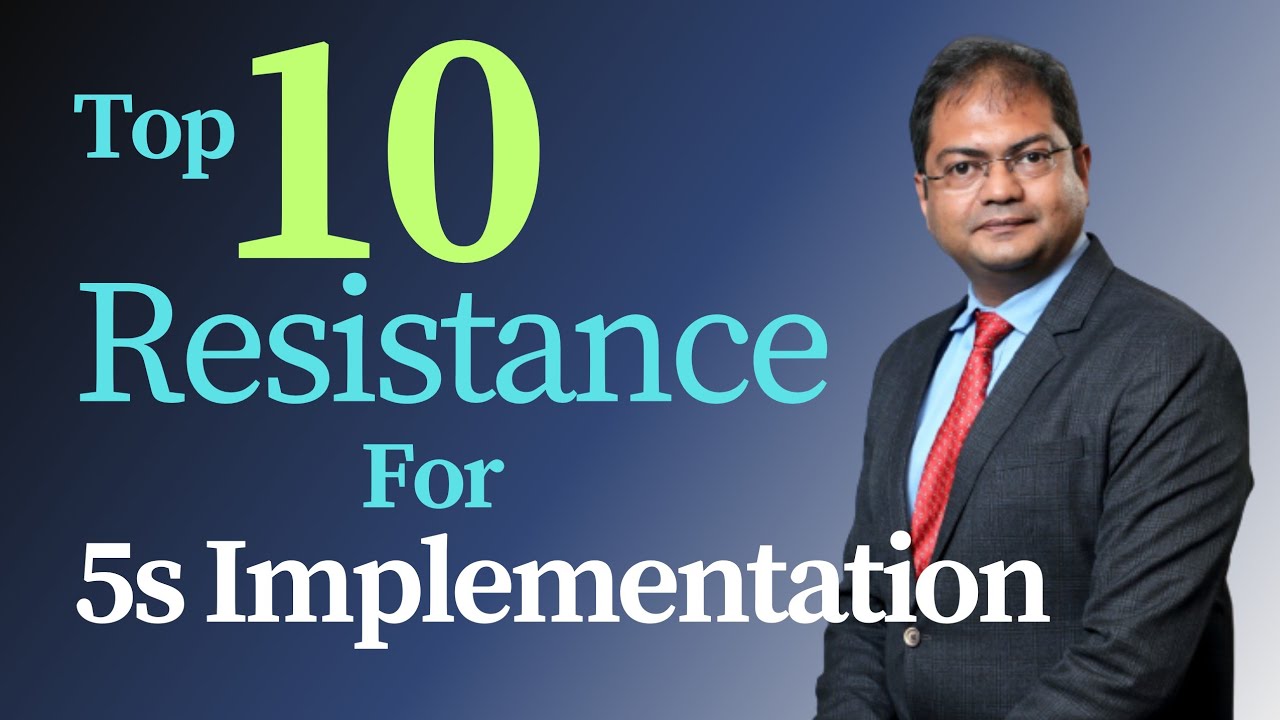
The top 10 reasons 5S fails in Indian Factories
Over 25 years of 5S consulting across Gujarat, Maharashtra, and Rajasthan, GreenDot has seen the same failure patterns appear repeatedly. If you are planning a 5S implementation, understanding these failure modes in advance is the single most useful thing you can do.
1. Management launches 5S but does not practise it
The fastest way to kill a 5S programme is for senior management to announce it enthusiastically and then never set foot on the shop floor for a Gemba walk. Workers have a very accurate radar for what management actually cares about. If the MD or Plant Head is not personally walking the floor weekly and commenting on 5S standards, the team understands — correctly — that 5S is not really a priority.
2. 5S is treated as a one-time event, not an ongoing system
Many Indian manufacturers do a 5S “drive” — a two-week intensive clean-up with great photos for the conference room — and then consider implementation complete. Within 90 days, the workspace returns to its previous state. 5S is not an event. It is a system that requires weekly audits, daily habits, and monthly reviews indefinitely.
3. No clear zone ownership
When everyone is responsible for 5S, no one is responsible for 5S. Every area of the factory must have a named owner — not a team, a person — who is accountable for maintaining the standard in their zone. When zone ownership is personal and visible (the owner’s name is on the zone board), accountability is built into the system.
4. Audit scores are tracked but not acted on
Audits are completed, scores are recorded, and then nothing happens. The 5S score becomes another number in a binder. A 5S audit is only useful if findings generate corrective actions within 7 days. Without follow-through, the audit teaches the team that 5S findings do not matter.
5. Signage and standards are in English in non-English workplaces
In Gujarat’s manufacturing belt, a significant portion of the shop-floor workforce reads Gujarati or Hindi. English-only visual standards, labels, and checklists are, in practice, invisible to these workers. Effective 5S visual management in Indian factories requires bilingual labels or icon-based systems that transcend language.
6. Shine is delegated to the cleaning staff
As discussed above, Shine is inspection, not just cleaning. Delegating it entirely to cleaning staff means that the inspection function — the most valuable part — never happens. Machine operators must be involved in or responsible for the Shine of their own equipment.
7. The Red Tag system is used once and abandoned
Red tagging during the initial Sort is done diligently. Six months later, when new unnecessary items begin accumulating (as they inevitably will), no one red-tags them because the process was never embedded as a regular practice. Sort must happen on a scheduled cycle, not just at launch.
8. 5S targets are set without measuring the baseline
“We want to improve 5S” is not a target. Without a baseline audit score, it is impossible to track progress, demonstrate results to management, or identify which specific areas are regressing. Always conduct a scored baseline audit before implementation begins.
9. Recognition is absent
5S asks workers to change habits — arguably the hardest thing to do in any organisation. Without recognition for zones that consistently score well, teams that maintain standards through busy production periods, or individuals who identify and fix gaps, the programme has no positive reinforcement. Recognition does not need to be expensive; it needs to be consistent and genuine.
10. 5S is seen as a cost centre, not a productivity investment
Some plant managers resist 5S because the implementation takes floor-team time away from production. This is a framing problem. The question is not “what does 5S cost us?” The question is “what does a disorganised, waste-filled workplace cost us per month in search time, tool loss, quality failures, and minor stoppages?” In most Indian factories, that number is larger than the cost of 5S implementation by a significant margin.
5S Implementation timeline: What to expect
A common question from Indian plant managers is: “How long will this take?” The honest answer is that building a stable 5S system takes 3–6 months, and reaching the stage where 5S is genuinely part of the organisational culture takes 12–18 months.
| Phase | Timeframe | Key Activities |
|---|---|---|
| Preparation | Weeks 1–2 | Baseline audit (score each S from 0–5), team formation, zone mapping, management briefing |
| Sort | Weeks 2–4 | Red tagging across all zones; Red Tag holding area established; disposal/relocation decisions |
| Set in Order | Weeks 4–6 | Floor marking, shadow boards, label systems, storage location design |
| Shine | Weeks 6–8 | Cleaning schedules created; operator inspection checklists designed; first Shine cycle completed |
| Standardize | Weeks 8–12 | Visual standards photographed and posted; zone checklists finalised; audit system designed |
| Sustain — Phase 1 | Months 3–6 | Weekly zone audits begin; scores tracked; management Gemba walks established |
| Sustain — Phase 2 | Months 6–18 | Monthly facility audits; scores trending toward 15+; 5S integrated into onboarding and daily team meetings |
The most important milestone is not the launch — it is the first monthly audit after the initial implementation. That is where the real work begins.
What does 5S look like in Indian manufacturing sectors?
5S is not a generic tool applied the same way everywhere. Effective implementation adapts to the specific environment. Here is what 5S looks like across Gujarat’s major industrial sectors:
| Industry Sector | How 5S Should Be Applied | Key Focus Areas |
|---|---|---|
| Chemical & Process Manufacturing (Ankleshwar, Vapi, Bharuch) | Sort addresses chemical segregation, expired reagent disposal, and MSDS compliance. Set in Order includes colour-coded drum storage and hazard zone markings. | Shine with PPE protocols; 6S with Safety; alignment with ISO 45001 and Responsible Care requirements |
| Engineering & Machine Shops (Rajkot, Vadodara, Ahmedabad) | Shadow boards for cutting tools and jigs. Shine includes daily chip and coolant inspection around CNC equipment. | Standardised work instructions; reduced setup time and tool-search waste |
| Textile Manufacturing (Surat) | Colour-coded storage for yarns and fabrics. Shine around weaving and processing machinery identifies spindle wear and lubrication needs. | Reduced idle machine time and fabric-handling damage |
| Pharmaceutical & Food Processing (Ahmedabad, Ankleshwar) | 5S is closely integrated with GMP requirements. Standardize aligns with GMP documentation requirements. | 5S audits and GMP inspections; documentation and compliance discipline |
| Packaging & Plastics (Vapi, Vadodara, Surat) | Set in Order for die and mould storage. Shine identifies hydraulic leaks and heating element degradation. | Colour-change and material-changeover SOPs; reduced setup time |
What Greendot’s 5S implementation looks like
GreenDot’s 5S consulting is not a training programme followed by a report. It is hands-on, floor-level implementation with measurable outcomes defined before work begins.
| Step | GreenDot Approach | What Happens |
|---|---|---|
| 1. Baseline Audit | Score every zone across all 5 pillars | Each S is scored from 0–5, creating a maximum score of 25 points per zone. Current conditions are documented with photographs. |
| 2. Management Alignment Session | Align leadership before implementation | Leadership understands what 5S is, what it requires from management, and the expected outcomes for the facility. |
| 3. Pilot Zone Implementation | Start with one carefully selected zone | A visible, manageable pilot demonstrates results and creates momentum for the wider implementation. |
| 4. Facility-Wide Rollout | Implement zone by zone | Trained internal 5S champions lead implementation in each zone under GreenDot guidance. |
| 5. Standard Setting | Create facility-specific standards | Visual standards, zone checklists, and audit systems are developed around the actual layout, processes, and workforce. |
| 6. Sustained Audit Support | Continue monitoring after implementation | Monthly audits track improvement, ensure findings are acted upon, and prevent the programme from slipping back. |
Our clients include Atul Limited, Castrol, Pidilite, and UPL — companies that understand that operational excellence requires sustained discipline, not one-time events.
Frequently Asked Questions
Housekeeping focuses on physical cleanliness — sweeping, mopping, removing visible waste.
5S is a structured discipline system that covers organisation, waste elimination, equipment
inspection, process standardisation, and cultural change. Housekeeping is a task that gets done
periodically. 5S is a system that shapes how work happens every day. Under India's Factories
Act 1948, housekeeping is a legal minimum. 5S goes far beyond that minimum.
5S was developed in manufacturing environments but is applied successfully in offices,
hospitals, warehouses, laboratories, and service organisations. In an office, Sort means removing
redundant files and equipment; Set in Order means organising digital and physical workflows;
Shine means regular review of systems and documentation; Standardize means consistent
process documentation; Sustain means regular audits and team habits. The principles are
universal — only the tools change.
A stable 5S system takes 3–6 months to build across a typical manufacturing facility. Full
cultural adoption — the point where 5S runs the same whether or not a consultant or manager is
present — takes 12–18 months. The timeline depends on the size of the facility, the starting
condition, and, most importantly, the consistency of management support.
A 5S audit evaluates each of the five pillars on a 0–5 scale, giving a maximum score of 25. A
score of 0 means no evidence of the standard; a score of 5 means fully sustained and
continuously improving. Most Indian factories score between 6 and 10 at the start. A score of 15
represents a solid, functioning system. A score of 20 or above is world-class. The purpose of the
audit is not the score itself — it is identifying the specific gaps to close each week.
6S adds Safety as a sixth pillar to the standard 5S framework. It is recommended for any industry
with significant physical hazards — chemical plants, pharmaceutical units, heavy engineering,
construction materials, and similar environments. In these sectors, Sort activities involve
hazardous material disposal; Shine requires PPE; Standardize must align with MSDS and EHS
protocols. If your company is pursuing ISO 45001 certification, 6S implementation creates direct
alignment with the standard's requirements.
The most common reasons are: management launches 5S but does not participate in Gemba
walks; the programme is treated as a one-time drive rather than an ongoing system; zone
ownership is not clearly assigned; audit findings are recorded but not acted on; and visual
standards are in English in workplaces where the floor team reads Gujarati or Hindi. The root
cause of most 5S failures is treating it as a housekeeping exercise — which brings us back to the
central point of this article.
The cost varies based on the size of the facility, the number of zones, the duration of
implementation support, and whether the engagement includes training, audit systems, and
follow-up. For Indian MSMEs, 5S is one of the most cost-effective lean interventions available
— it requires no capital investment in equipment or technology, only a disciplined commitment
of time and management attention. Contact GreenDot for a facility-specific consultation and
investment outline.
Yes — 5S can be self-implemented, particularly in smaller facilities with a committed
management team and at least one internal 5S champion who has been trained in the
methodology. GreenDot offers 5S Train the Trainer programmes designed specifically to build
this internal capability. The advantage of consultant-led implementation is speed, objectivity
(internal teams often avoid red-tagging things that someone senior "owns"), and the audit
discipline that keeps improvement on track.
5S is the foundation that makes both TPM and Kaizen work. Kaizen improves specific processes
— but in a disorganised workplace, it is difficult to see what needs improving, and
improvements slip back without the discipline that 5S provides. TPM builds operator ownership
of machines through autonomous maintenance — but that ownership begins with Shine, where
operators clean and inspect their own equipment daily. The recommended implementation
sequence is 5S first, then Kaizen, then TPM.
Any industry with physical production or service delivery operations can benefit from 5S. In the
Gujarat and Maharashtra context, the highest-impact applications are in chemical and process
manufacturing (where 5S directly addresses safety and EHS compliance), engineering and
machine shops (where tool organisation and machine inspection produce immediate results),
pharmaceutical manufacturing (where 5S aligns with GMP requirements), textile manufacturing
(where material organisation and machine maintenance are ongoing challenges), and packaging
operations (where changeover time and material waste are major cost drivers).
Yes, significantly. A well-implemented 5S system creates documented procedures (Standardize),
regular audits (Sustain), and a disciplined team culture that directly supports the requirements of
ISO 9001 (quality management), ISO 14001 (environmental management), and ISO 45001
(occupational health and safety). In GreenDot's experience, companies with mature 5S systems
move through ISO certification readiness significantly faster than those starting from scratch.
Long-term sustainability requires four things: regular audits with public scores and acted-on
findings; named zone ownership at every level; leadership Gemba walks (the plant head must be
visibly present and engaged); and recognition for teams that maintain their standards. The
Sustain pillar is where most programmes fail — not because it is difficult, but because it requires
consistent discipline from management over months and years, not just the initial weeks of
launch energy.
Testimonials
Conclusion
Housekeeping cleans the workspace. 5S organises it, makes waste visible in it, turns cleaning into inspection, builds standards that eliminate variability, and creates the discipline that sustains all of it over time.
The cleaning you see when you walk into a well-implemented 5S workplace is a side effect, a visible signal of a system working. What you cannot see, but what your P&L will reflect, is reduced machine downtime, fewer quality defects, faster changeovers, less time wasted searching, and a team that has developed the daily habit of improvement.
In India’s manufacturing sector — where MSMEs face increasing pressure from quality-demanding buyers, tightening compliance requirements, and the need to compete on productivity as well as price — 5S is not a nice-to-have. It is the starting point for any serious operational improvement programme.
GreenDot has been implementing 5S across Gujarat’s industrial belt for 25 years. We know what it looks like when it works, and we know what it looks like when it fails. The difference is almost always not the tool — it is how seriously it is treated.
If you are ready to treat 5S seriously, we are ready to help you implement it.
Ready to implement 5S in your factory?
GreenDot has implemented 5S across manufacturing units in Surat, Vapi, Ankleshwar, Vadodara, Rajkot, and beyond — in chemical plants, engineering workshops, textile mills, pharma units, and packaging operations.