
Classification of Six Big Losses in OEE: Understanding and Addressing Production Inefficiencies
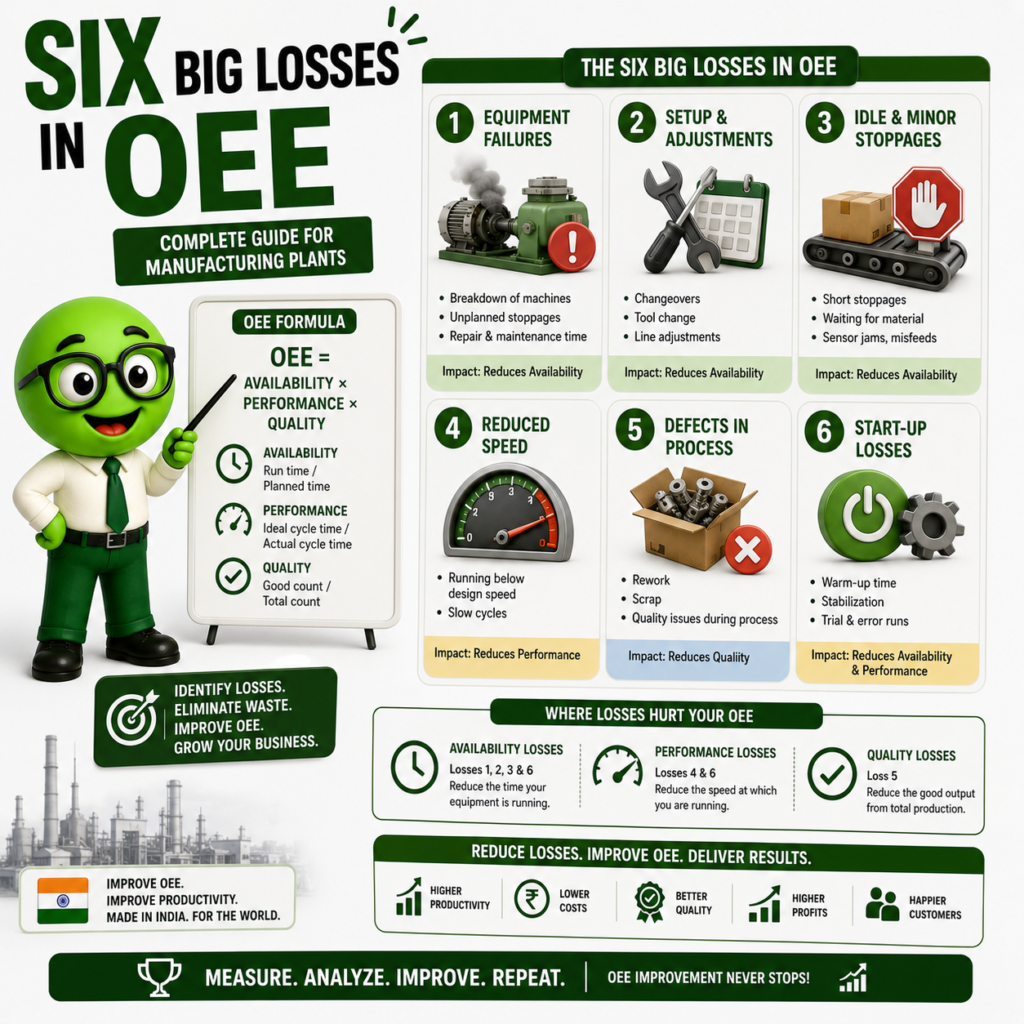
What Are the Six Big Losses in OEE? The Six Big Losses are the six most common causes of equipment-related productivity loss in manufacturing. They were defined by Seiichi Nakajima as part of the Total Productive Maintenance (TPM) methodology developed by the Japan Institute of Plant Maintenance (JIPM). Together, these six losses explain why even […]
What is Lean Six Sigma?

online lean six sigma certification programs, Sigma (𝝈) is the Greek letter representing a statistical unit of measure that defines the standard deviation (SD) of a population. We will cover the following topics in this blog History of Six Sigma Milestones Benefits of Six Sigma Implementation What’s the Six Sigma concept? It can be understood in three different […]
The Cost of Poor Quality: Understanding Its Formula, Calculation, and Impact in Manufacturing
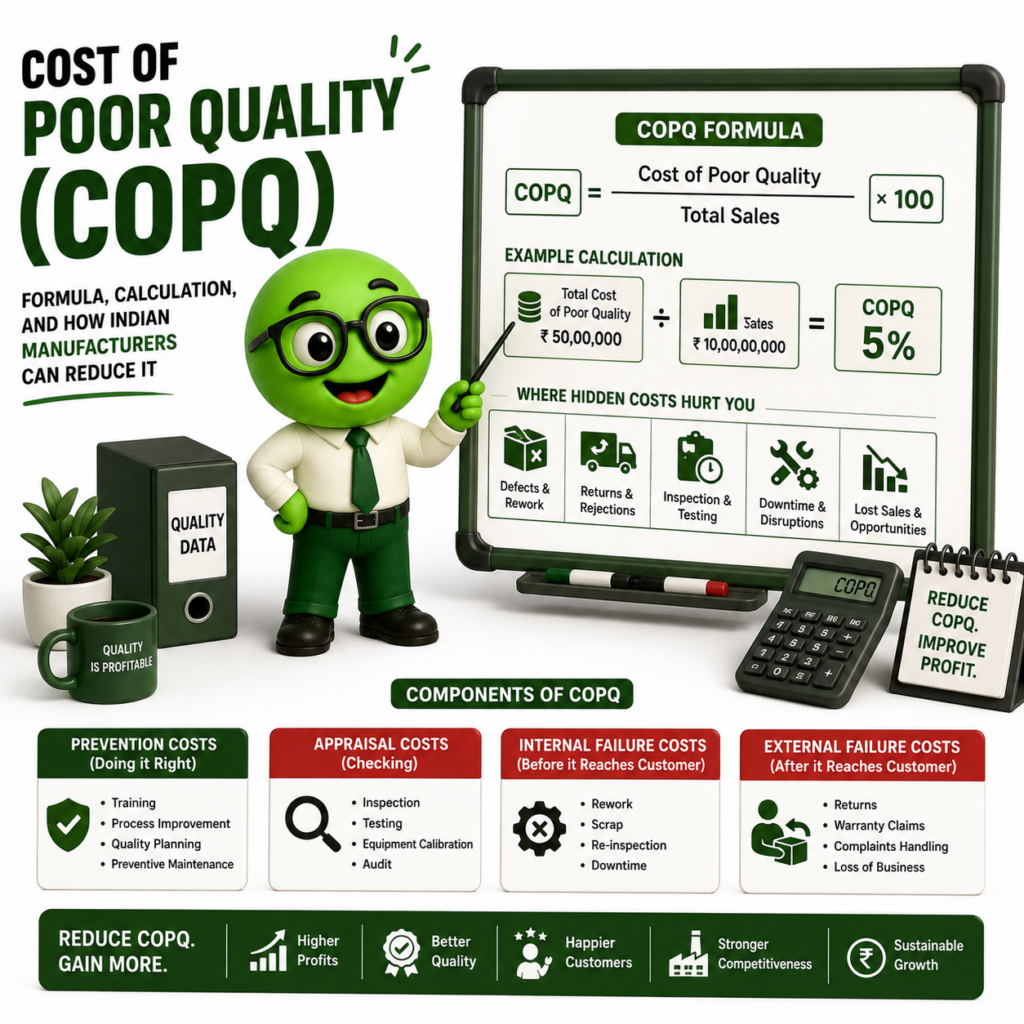
Every manufacturing defect has a price. Most Indian manufacturers can tell you their scrap rate. Very few can tell you their total Cost of Poor Quality — and that gap is where profits silently disappear. This guide explains what COPQ is, how to calculate it (with a worked example in Indian Rupees), what benchmarks to […]
8 Wastes of Lean Manufacturing: The Complete Guide for Indian Manufacturers (TIMWOODS & DOWNTIME Explained)
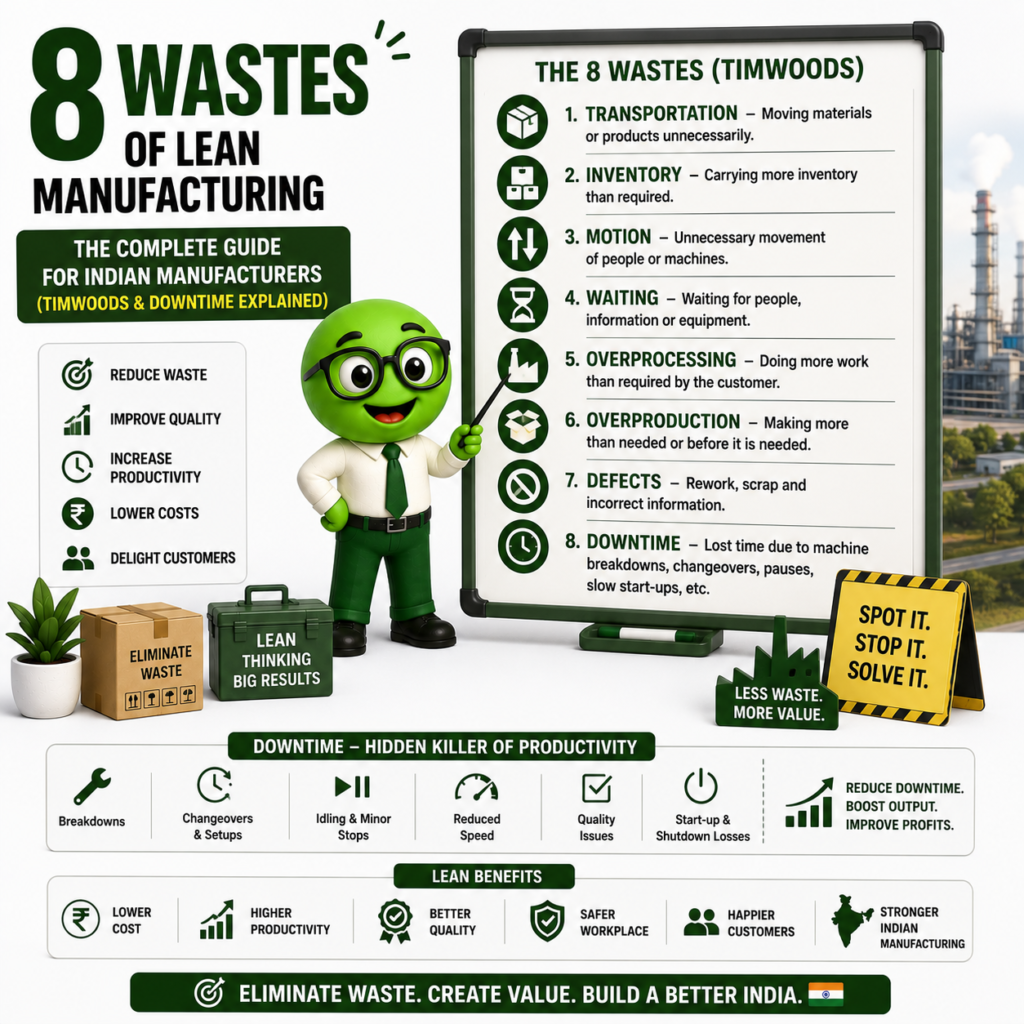
What Are the 8 Wastes of Lean Manufacturing? The 8 Wastes of Lean Manufacturing are eight categories of activity that consume time, money, and resources without adding any value for the customer. They are the primary targets of any Lean Manufacturing improvement effort. In simple terms: waste is anything your customer would refuse to pay […]
Types of Abnormalities in TPM: A Complete Guide for Plant Managers and Operators
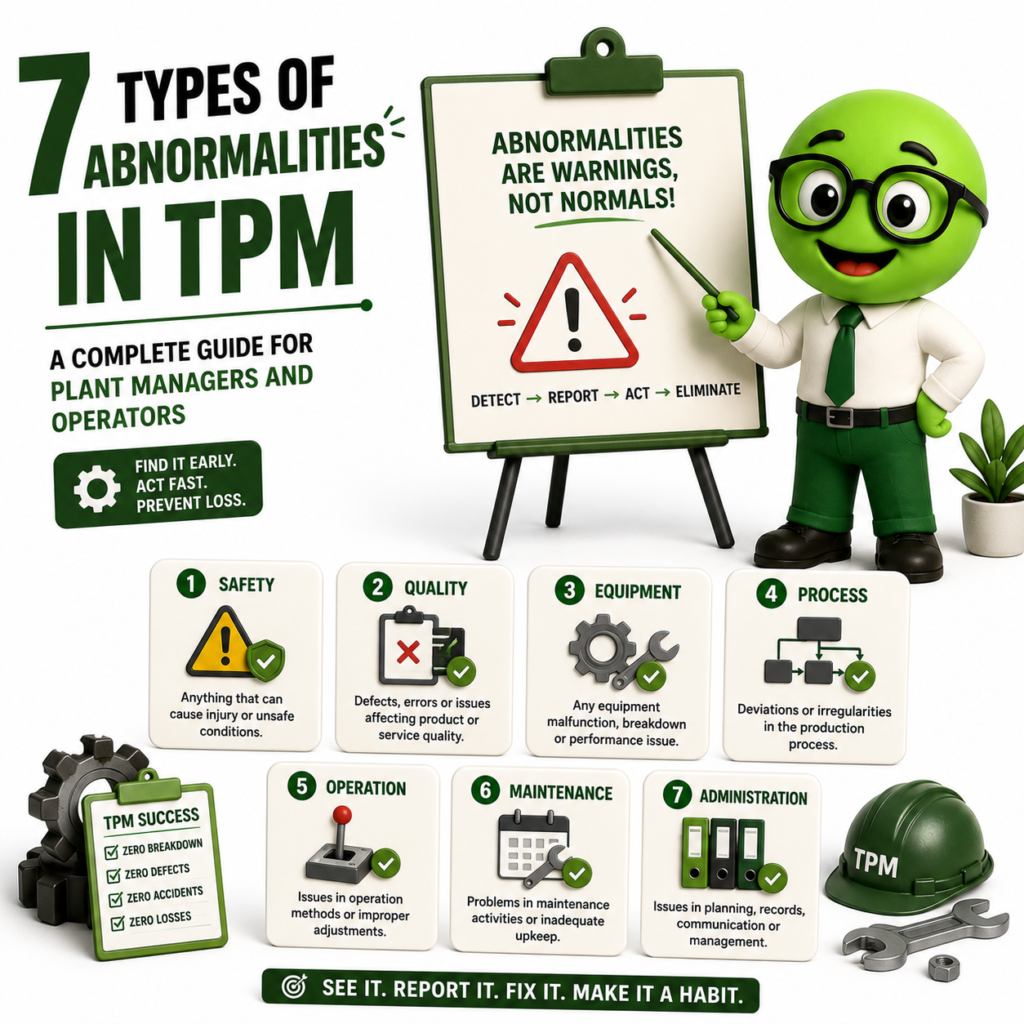
Total Productive Maintenance (TPM) does not fail because of major breakdowns. It fails because small, hidden problems go unnoticed for too long. These problems have a name in TPM: abnormalities. Understanding and eliminating the 7 types of abnormalities is the foundation of Autonomous Maintenance (Jishu Hozen) — the pillar of TPM that transforms operators from […]
Muda Mura Muri

What’s Muda Mura Muri in Lean Manufacturing? Muda, Mura, and Muri are three Japanese terms that are commonly used in the context of Lean manufacturing. Muda refers to any activity that does not add value to the product or service being produced. It is often referred to as “waste” and can take many forms, such […]
SMART Goal Setting in Six Sigma

Achieving the Goal of Six Sigma A SMART goal is an acronym that stands for Specific, Measurable, Achievable, Realistic, and Time-bound. We will cover the following topic in this blog How to set Achieving the Goal of Six Sigma Explained with Case Study As we know that the Achieving the Goal of Six Sigma is an acronym that stands for the below five words.S-SpecificM-MeasurableA-AchievableR-RealisticT- Time-Bound 1. […]
5S in the Workplace | 5S Implementation

What is 5s implementation? Benefits of 5S Quality: 5S meaning | What does the 5S Stand for? |How To Start 5S Implementation 1. History: 2. Benefits of 5S 3. Quality 4. 5S Meaning| What does the 5S stand for? 5. How to start 5S implementation? (1) 1S-Seiri or Sort Steps for Sorting 5S Exemplifications (2) 2S-Seiton or Set In Order Basic Principles of Set-in […]
